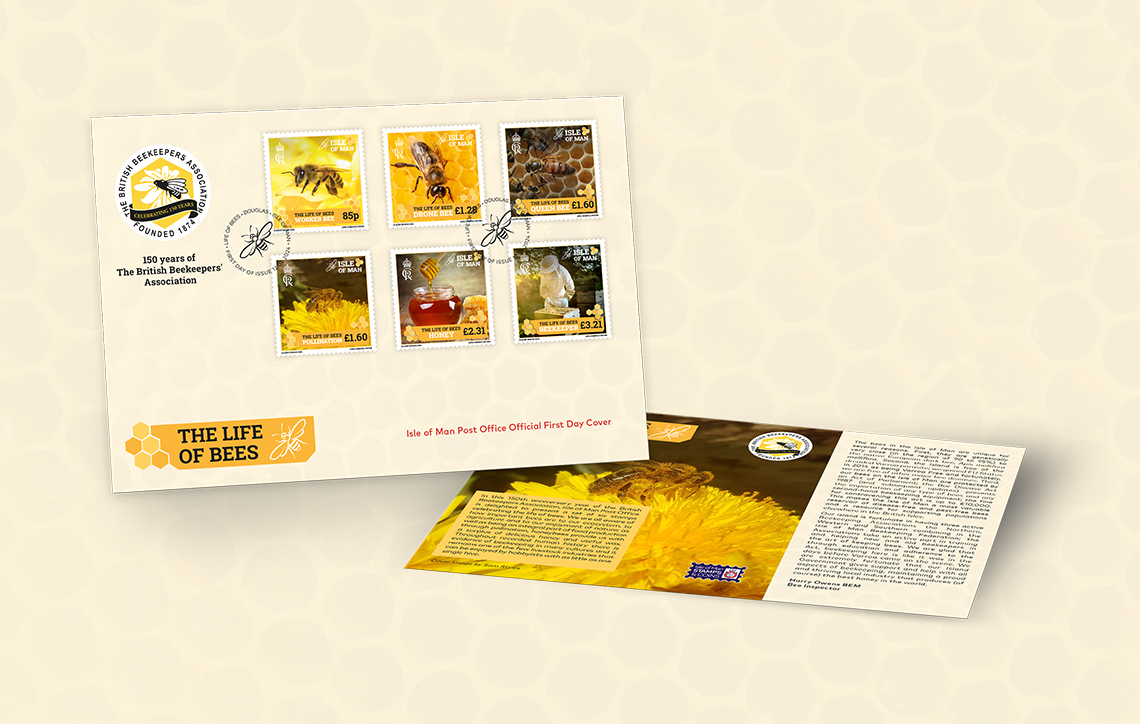
The Life of Bees Stamps
Graphic Design

CELEBRATING The Life of Bees
The Isle of Man Post Office and Glazier Design are honoured to present this set of stamps celebrating the Life of Bees.
In this issue, the Isle of Man Post Office and Glazier Design are delighted to present a set of six stamps celebrating the life of bees. We are all aware of how important bees are to our ecosystem, to agriculture and to our enjoyment of nature; as well as being an integral part of food production through pollination, honeybees provide us with a surplus of delicious honey and useful wax. Throughout recorded human history there is evidence of beekeeping in many cultures and it remains one of the few livestock industries that can be enjoyed by hobbyists with as little as one single hive.
The Life of Bees Stamps can be purchased here from 12th April 2024: iompost.com/bees
Issue Text:
In this 150th anniversary year of the British Beekeepers Association, Isle of Man Post Office is delighted to present a set of six stamps celebrating the life of bees. We are all aware of how important bees are to our ecosystem, to agriculture and to our enjoyment of nature; as well as being an integral part of food production through pollination, honeybees provide us with a surplus of delicious honey and useful wax. Throughout recorded human history there is evidence of beekeeping in many cultures and it remains one of the few livestock industries that can be enjoyed by hobbyists with as little as one single hive.
The bees in the Isle of Man are unique for several reasons. First, they are genetically very close (in the region of 90 to 95%) to the native European dark bee, Apis mellifera mellifera. Second, the Island is free of the dreaded Varroa parasite; we gained EU Status in 2014 as being Varroa Free and fortunately, we are free of other major bee diseases. Third, our bees on the Isle of Man are protected by an Act of Parliament; the Bee Disease Act 1987 (and subsequent updates) prevents the importation of any type of bees and any second-hand beekeeping equipment; the fine for contravening this act is up to £10,000. This makes the Isle of Man a most valuable reservoir of disease-free and pest-free bees and a resource for supporting populations elsewhere in the British Isles.
Our island is fortunate in having three active Beekeeping Associations the Northern, Western and Southern combining in the Isle of Man Beekeeping Federation; the Associations take an active part in training and helping new and old beekeepers in the art of keeping bees. We are glad that through education and adherence to the Act, beekeeping here is like it was in the days before Varroa came on the scene. We are extremely fortunate that our Island Government gives support and help with all aspects of beekeeping, maintaining a proud and thriving local industry that produces (of course) the best honey in the world.
Harry Owens
BEM Bee Inspector
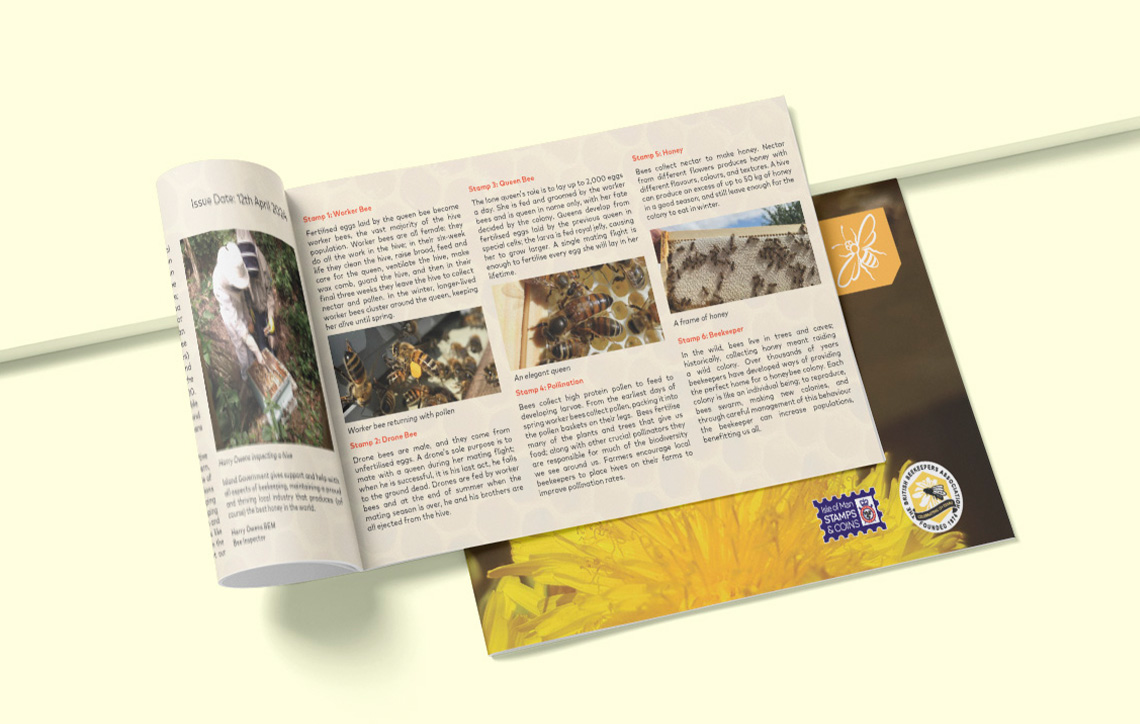

Stamp 1: Worker Bee
Fertilised eggs laid by the queen bee become worker bees, the vast majority of the hive population. Worker bees are all female; they do all the work in the hive; in their six-week life they clean the hive, raise brood, feed and care for the queen, ventilate the hive, make wax comb, guard the hive, and then in their final three weeks they leave the hive to collect nectar and pollen. In the winter, longer-lived worker bees cluster around the queen, keeping her alive until spring.

Stamp 2: Drone Bee
Drone bees are male, and they come from unfertilised eggs. A drone’s sole purpose is to mate with a queen during her mating flight; when he is successful, it is his last act, he falls to the ground dead. Drones are fed by worker bees and at the end of summer when the mating season is over, he and his brothers are all ejected from the hive.
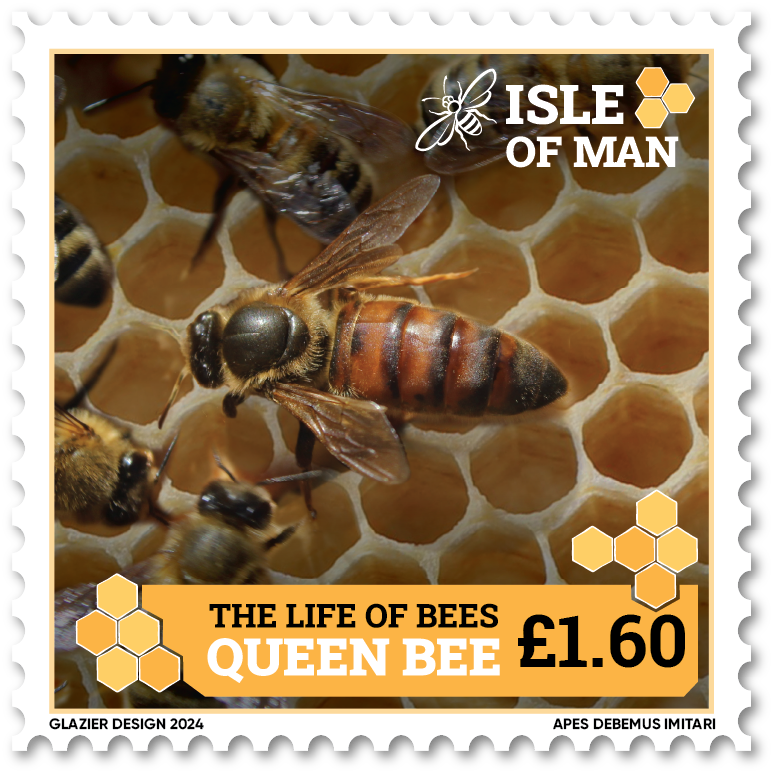
Stamp 3: Queen Bee
The lone queen’s role is to lay up to 2,000 eggs a day. She is fed and groomed by the worker bees and is queen in name only, with her fate decided by the colony. Queens develop from fertilised eggs laid by the previous queen in special cells; the larva is fed royal jelly, causing her to grow larger. A single mating flight is enough to fertilise every egg she will lay in her lifetime.

Stamp 4: Pollination
Bees collect high protein pollen to feed to developing larvae. From the earliest days of spring worker bees collect pollen, packing it into the pollen baskets on their legs. Bees fertilise many of the plants and trees that give us food; along with other crucial pollinators they are responsible for much of the biodiversity we see around us. Farmers encourage local beekeepers to place hives on their farms to improve pollination rates.
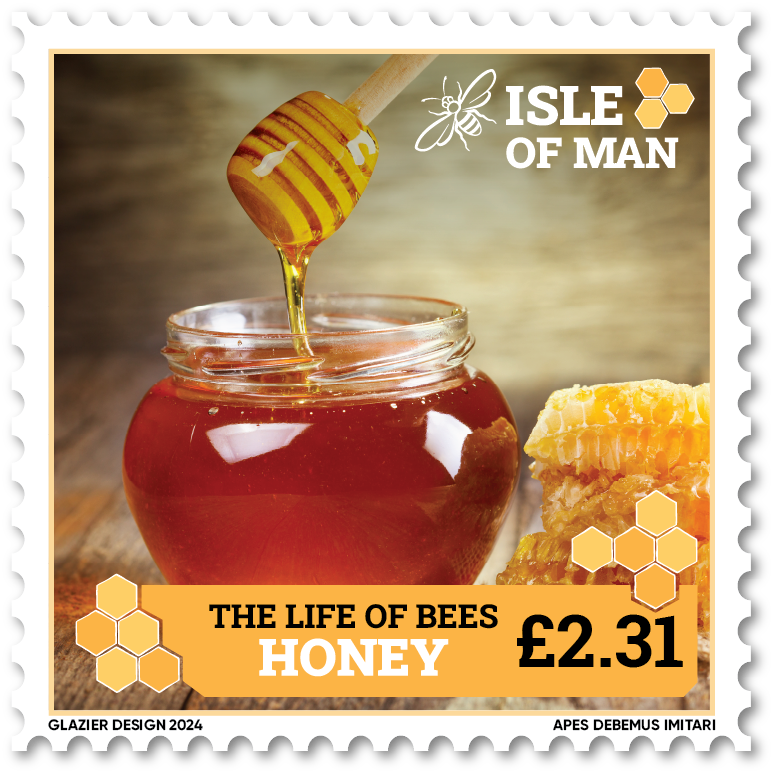
Stamp 5: Honey
Bees collect nectar to make honey. Nectar from different flowers produces honey with different flavours, colours, and textures. A hive can produce an excess of up to 50 kg of honey in a good season; and still leave enough for the colony to eat in winter.

Stamp 6: Beekeeper
In the wild, bees live in trees and caves; historically, collecting honey meant raiding a wild colony. Over thousands of years beekeepers have developed ways of providing the perfect home for a honeybee colony. Each colony is like an individual being; to reproduce, bees swarm, making new colonies, and through careful management of this behaviour the beekeeper can increase populations, benefitting us all.